


 English
  Deutsch
A pencil case filled with small, brightly shaped erasers isn't just a novelty on a school desk anymore. Kawaii erasers have carved out a steady spot in stationery lines worldwide, sitting somewhere between functional writing tool and pocket-sized collectible, and the production behind them is more deliberate than the playful shapes might suggest.
Where the Style Comes From
"Kawaii" describes a Japanese design aesthetic built around cuteness — rounded edges, expressive faces, pastel color palettes, and objects modeled after food, animals, or everyday items rendered in miniature. Erasers picked up this treatment decades ago, moving away from plain rectangular blocks toward shapes designed to be noticed, collected, and swapped among kids the way trading cards once were.
That shift changed what the product needed to deliver. A standard eraser only has to remove pencil marks cleanly. A kawaii eraser has to do that too, but it also has to hold its shape through molding, keep its color from fading with handling, and read clearly as whatever character or object it's meant to represent, even at a size smaller than a thumb.
Materials and How Shape Gets Molded
Most kawaii erasers are made from soft PVC or a synthetic rubber compound, chosen specifically because it molds cleanly into fine detail and stays flexible rather than becoming brittle. The production process typically follows a sequence like this:
- Resin is heated and colored in batches, often with several colors prepared separately for erasers with multiple sections
- The colored material is pressed into a mold carved with the intended shape, sometimes assembled from multiple pieces if the design has layered or interlocking parts
- Heat and pressure fuse the piece into its final form, after which it's cooled and released from the mold
- Any fine detail — facial features, texture lines, secondary colors — gets added either during molding or as a separate printing or stamping step afterward
Multi-part designs, like an eraser shaped as a food tray with several removable pieces, require more precise mold alignment, since each piece needs to fit against the others without gaps or overlap.
Why Shape Complexity Matters for Buyers
Not all kawaii erasers carry the same production complexity, and that difference matters for buyers sourcing stationery lines at volume. A single-color, single-piece design is comparatively straightforward to mold consistently across a large batch. A multi-color, multi-piece design — say, a bento box eraser with six separate food-shaped components — demands tighter mold tolerances and more careful color-matching across pieces so the finished set looks coordinated rather than mismatched.
Buyers working with manufacturers on custom eraser lines generally submit reference art or physical samples early in the process, since two-dimensional character designs don't always translate directly into a moldable three-dimensional shape without some adjustment. Rounding out fine details that work fine in a flat illustration but don't hold up structurally in soft PVC is a routine part of that back-and-forth before a full production run gets confirmed.
A Category Built Around Repeat Appeal
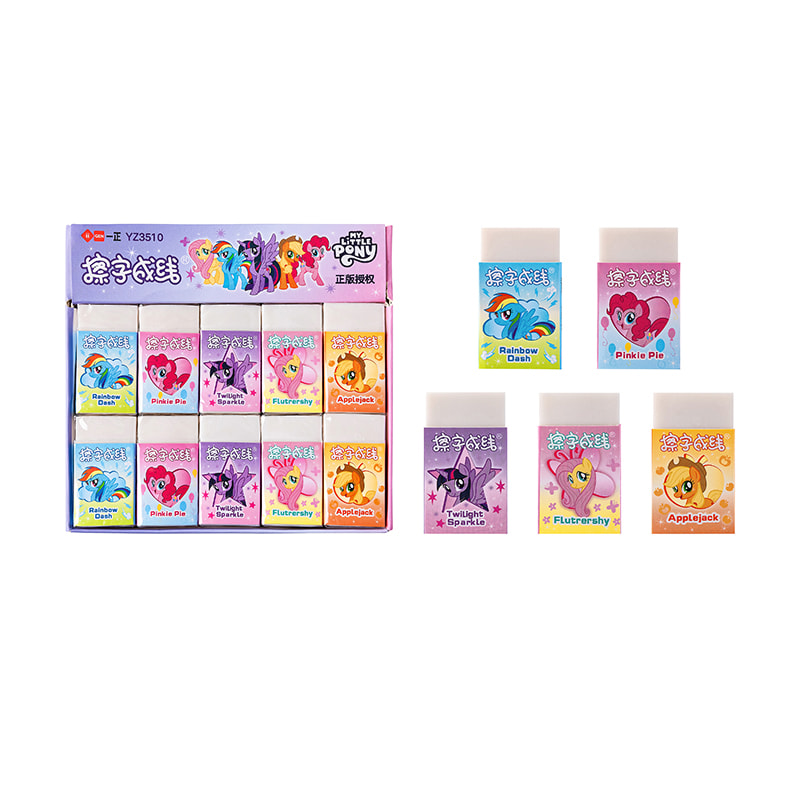
Part of what keeps kawaii erasers moving through stationery and gift channels is the collectible structure many lines are built around — themed sets, seasonal releases, or blind-box packaging where the specific design inside isn't visible until opened. That structure encourages repeat purchasing in a way a plain single eraser never would, since completing a themed set becomes part of the appeal alongside the erasers' basic function.
For manufacturers and distributors supplying this category, that pattern shapes production planning as much as the molding process itself — a themed set typically needs coordinated colors and consistent shape quality across every piece in the line, since a set with visibly uneven pieces undermines the collectible appeal the category depends on in the place.

 +65 89572571


